

If you’ve ever been told to “just think positive” while struggling you probably know how frustrating that advice can feel.
When you’re exhausted, stuck in survival mode, or carrying emotional pain, positivity isn’t something you can simply switch on.
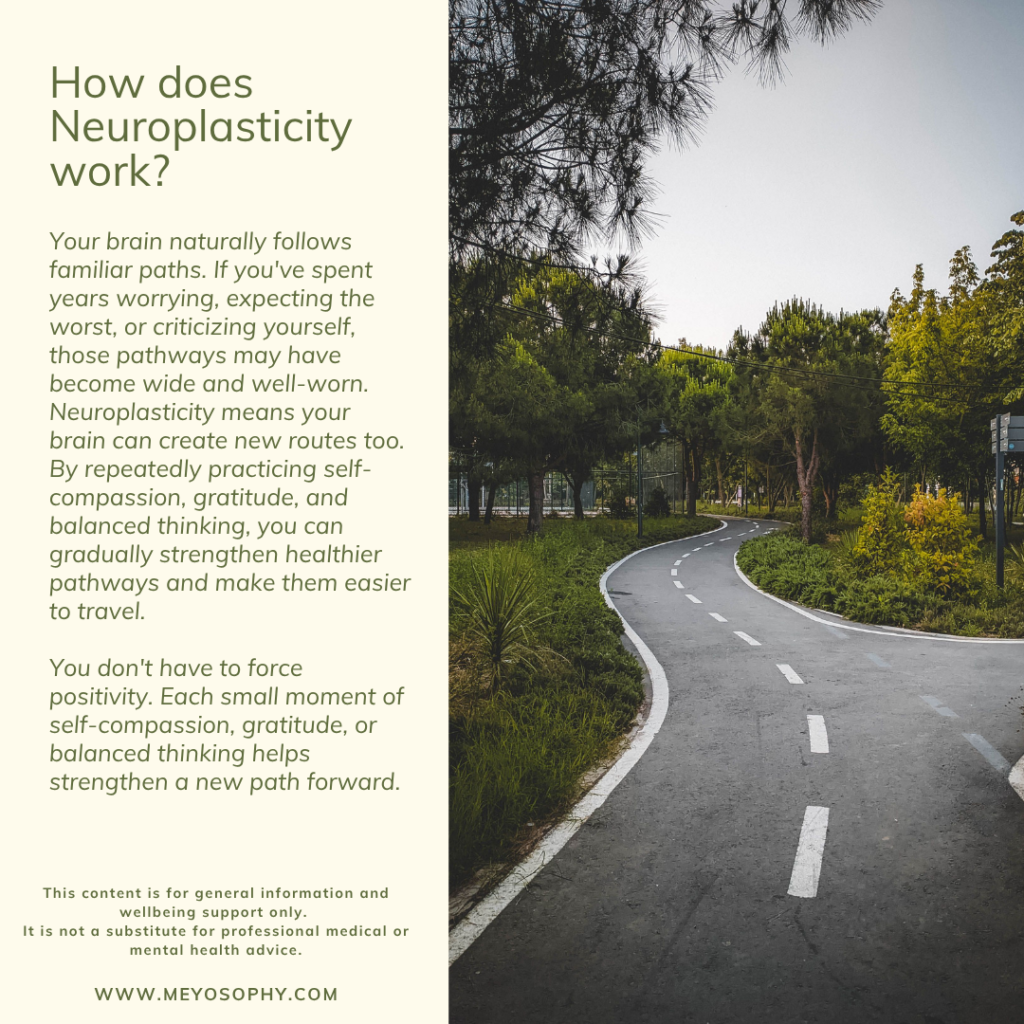
The good news is that your brain is capable of change.
Research shows that our brains continuously adapt throughout life through a process called neuroplasticity. This means that over time, we can strengthen patterns that support hope, resilience, and emotional wellbeing. Even when life feels difficult.
Learning how to train your brain to be more positive isn’t about ignoring problems, forcing happiness, or pretending everything is okay. It’s about helping your nervous system notice safety, support, and possibility alongside life’s challenges.
Whether you’re struggling yourself, supporting a loved one, or working as a therapist or mental health professional, these gentle practices can help build a more balanced and compassionate mindset.
Disclaimer: I’m not a mental health professional, everything here is shared from research and personal experience. If you’re feeling overwhelmed or need support, please consider talking to a qualified professional. You’re not alone. If you’re in the U.S., you can call or text 988 anytime. For help in other countries, visit https://findahelpline.com.
What Does It Mean to Train Your Brain to Be More Positive?
Our brains naturally pay more attention to threats than pleasant experiences. This is called the negativity bias.
From an evolutionary perspective, noticing danger helped humans survive. That’s very helpful if there is an actual threat. Unfortunately, this same survival mechanism can make us focus on worst-case scenarios, criticism, mistakes, and fears (even if there is no need to).
For people living with anxiety disorders, depression, PTSD, chronic stress, burnout, or emotional overwhelm, this negativity bias can become even stronger.
Training your brain to be more positive doesn’t mean eliminating negative thoughts. Instead, it means teaching your brain to notice positive experiences too.
Think of it like strengthening a muscle. The more often you practice certain mental habits, the easier they become over time.
1. Start Noticing Small Good Moments
Many people believe positivity comes from major life changes.
In reality, the brain often responds more powerfully to small, repeated positive experiences.
Try noticing:
- A warm cup of coffee or tea
- Your pet sitting next to you
- A kind text message
- A comfortable blanket
- A moment of relief during a difficult day
- The feeling of sunlight through a window
The goal isn’t to force gratitude. It’s simply to notice what feels okay, safe, comforting, or pleasant in this moment.
A Simple Practice
At the end of each day, write down: one thing that felt good or one thing that felt manageable. Even tiny moments count.
Want to read more about the practice of gratitude? Read more here.
2. Speak to Yourself Like Someone You Care About
Many people would never speak to a friend the way they speak to themselves.
When something goes wrong, your inner voice might say:
- “I’m such a failure.”
- “I should be doing better.”
- “What’s wrong with me?”
Over time, these thoughts can reinforce feelings of shame and hopelessness.
Instead, try asking:
What would I say to someone I love if they were experiencing this?
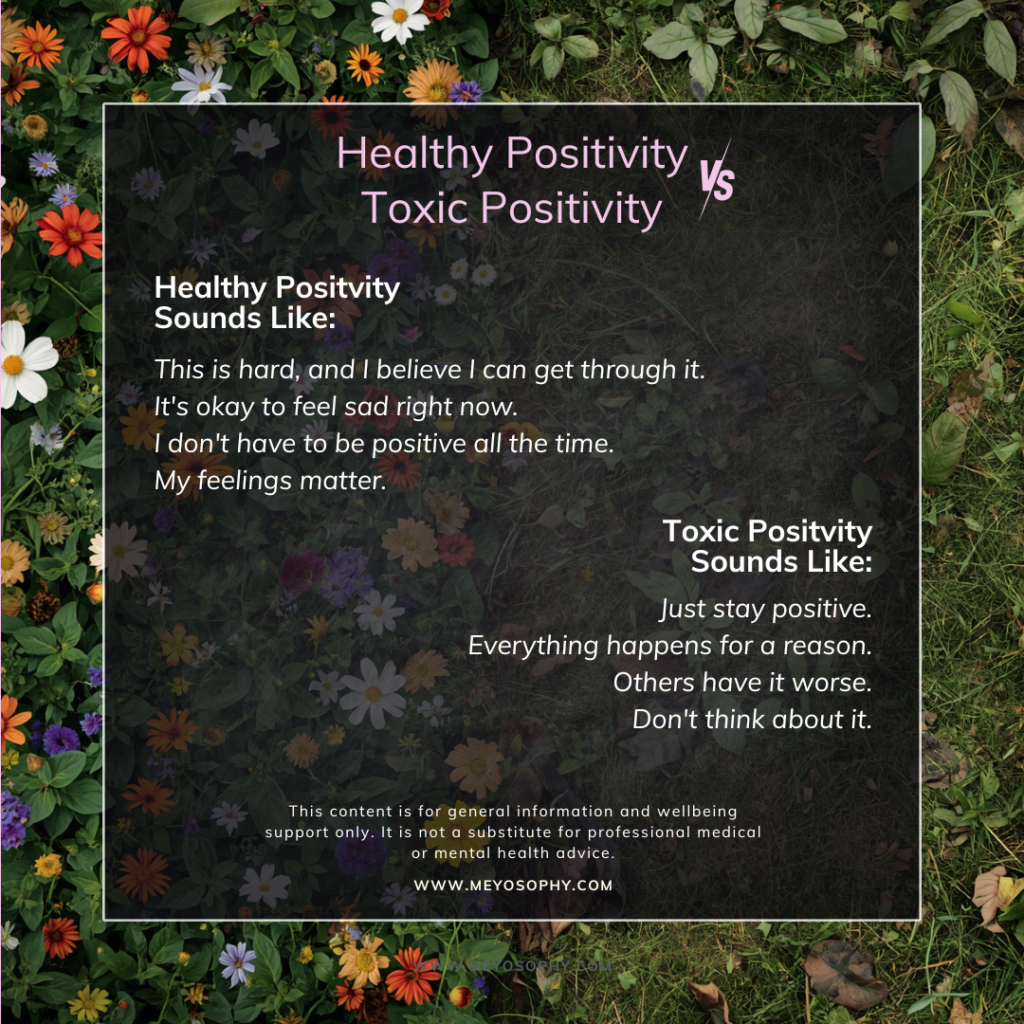
You don’t have to be unrealistically positive.
Sometimes a compassionate statement is enough:
- “This is really hard right now.”
- “I’m doing the best I can.”
- “It’s okay to struggle.”
- “I don’t have to have all the answers today.”
Self-compassion has been linked to improved mental health, emotional resilience, and reduced anxiety.
3. Challenge the Brain’s Worst-Case Scenarios
Anxiety often acts like a faulty prediction machine.
It constantly asks:
- What if something goes wrong?
- What if I fail?
- What if people judge me?
The brain starts treating possibilities as facts.
When you notice catastrophic thinking, gently ask:
- What evidence supports this fear?
- What evidence doesn’t support it?
- Is there another explanation?
- What would I tell a friend in this situation?
- Have I survived difficult situations before?
The goal isn’t to convince yourself everything will be perfect. The goal is to create a more balanced perspective.
4. Spend More Time With Supportive People
Human beings are wired for connection. Our nervous systems constantly respond to the people around us.
Supportive relationships can help us feel:
- Safer
- More regulated
- More hopeful
- Less alone
This doesn’t mean you need a large social circle. One safe, understanding person can make a big difference.

If in-person contact isn’t available to you, connection can also come through:
- Online support groups
- Therapy
- Peer communities
- Trusted family members
- Close friends
Healthy connection helps remind the brain that support exists.
5. Give Positive Experiences Time to Land
One fascinating finding from neuroscience is that negative experiences often stick quickly, while positive experiences tend to pass through our awareness more easily.
Psychologist Rick Hanson often describes this as the brain being like Velcro for negative experiences and Teflon for positive ones.
When something pleasant happens, try slowing down.
For 10 to 20 seconds, notice:
- What you’re seeing
- What you’re feeling
- Any sense of comfort or relief
Allow your brain time to fully register the experience. This simple practice can strengthen positive neural pathways over time.
6. Reduce Your Exposure to Constant Negativity
Your brain absorbs more than you may realize.
Constant exposure to:
- Distressing news
- Social media conflict
- Doomscrolling
- Toxic online discussions
- Highly critical environments
Can keep your nervous system on high alert. Consuming bad news can start the body’s fight or flight response. Stress hormones run in our blood stream and your good mood is gone. Only 14 minutes of news consumption is enough to have a negative impact on our mental health.
This doesn’t mean you have to avoid reality. It means creating healthier boundaries around what you consume.
Ask yourself:
Does this information help me, or is it keeping me stuck in fear?
Small adjustments can significantly improve emotional wellbeing.
7. Move Your Body in a Way That Feels Safe
Movement affects both the brain and nervous system.
Physical activity can support:
- Mood regulation
- Stress reduction
- Better sleep
- Increased energy
- Improved emotional resilience
Importantly, movement doesn’t have to mean intense exercise.
Especially for people experiencing burnout, depression, chronic illness, or trauma, gentle movement may be more helpful.

Examples include:
- Stretching
- Walking
- Dancing in your living room
- Yoga
- Gentle mobility exercises
The goal is supporting your body and mind. If you want to read more about the mind body connection and get some example exercises you can try, click here.
8. Practice Looking for What’s Working
When life feels overwhelming, the brain often focuses exclusively on problems.
Try asking yourself: What’s Working Right Now?
Maybe:
- You got out of bed.
- You answered an email.
- You drank water.
- You made it through a difficult day.
- You reached out for support.
These may seem small. But acknowledging progress helps create a more realistic and balanced view of your life.
9. Build Small Moments of Predictability
The brain feels safer when it knows what to expect. Simple routines can help create a sense of stability (and safety).
Examples include:
- Drinking tea at the same time each morning
- Taking a short walk after lunch
- Reading before bed
- Practicing a calming ritual after work
You don’t need a perfect routine. Even one predictable habit can help your nervous system feel more grounded.
10. Celebrate Progress Instead of Perfection
Many people postpone feeling good until they reach a major goal. The problem is that perfection is always moving.
Instead of asking:
“Am I there yet?”
Try asking:
“Am I moving in a helpful direction?”
Growth often looks like:
- Recovering from setbacks faster
- Being slightly kinder to yourself
- Setting one healthy boundary
- Asking for help
- Taking one small step
These changes matter. They are signs of healing, even if they don’t feel dramatic.
A Gentle Reflection Exercise
Take a moment to reflect on these questions:
- What is one positive thing I noticed today?
- What helps me feel safe or grounded?
- Which of these practices feels most realistic right now?
- What would a small step forward look like this week?
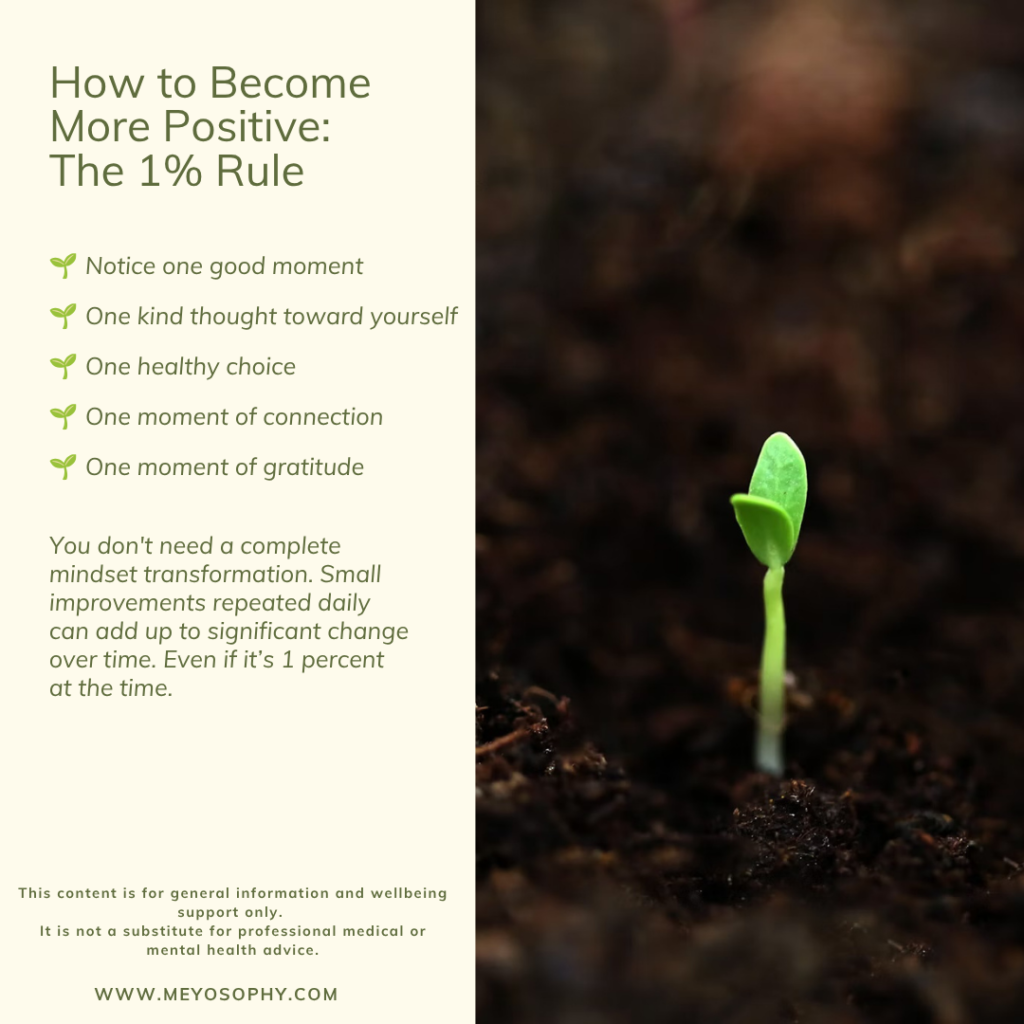
Remember, you don’t have to do all ten strategies at once.
Small consistent changes are often more effective than major transformations.
When Positivity Feels Impossible
If you’re living with depression, trauma, severe anxiety, grief, burnout, or another mental health condition, there may be times when positivity feels completely out of reach.
That doesn’t mean you’re failing.
Sometimes healing begins with:
- Getting through the day
- Meeting basic needs
- Resting
- Reaching out for support
- Practicing self-compassion
If you’re struggling, consider speaking with a licensed mental health professional who can provide personalized support.
You deserve help, care and understanding.
Final Thoughts
Learning how to train your brain to be more positive isn’t about forcing happiness or ignoring pain. It’s about gently expanding your awareness to include moments of safety, connection, hope, and possibility.
Over time, these small moments can add up. Not because life becomes perfect, but because your brain learns that difficult experiences are not the whole story.
Healing rarely happens overnight. But every small act of compassion, awareness, and self-care helps create new pathways toward resilience and wellbeing.
How do you stay positive when life gets hard? Let us know in the comments!
Sources
- American Psychological Association (APA). Research on resilience, self-compassion, and wellbeing.
- National Institute of Mental Health (NIMH). Information on anxiety, depression, and mental health conditions.
- Rick Hanson, PhD. Work on neuroplasticity and positive neuropsychology.
- Mental Health America (MHA). Negative news coverage and mental health. https://mhanational.org/resources/negative-news-coverage-and-mental-health/
- Harvard Health Publishing. Research on neuroplasticity and emotional wellbeing.
- Centers for Disease Control and Prevention (CDC). Mental health and coping resources.
- The Greater Good Science Center at the University of California, Berkeley. Research on gratitude, compassion, resilience, and emotional wellbeing.
